
Casino Payment Methods in Australia: What Still Moves Money in 2026
 Available in AU
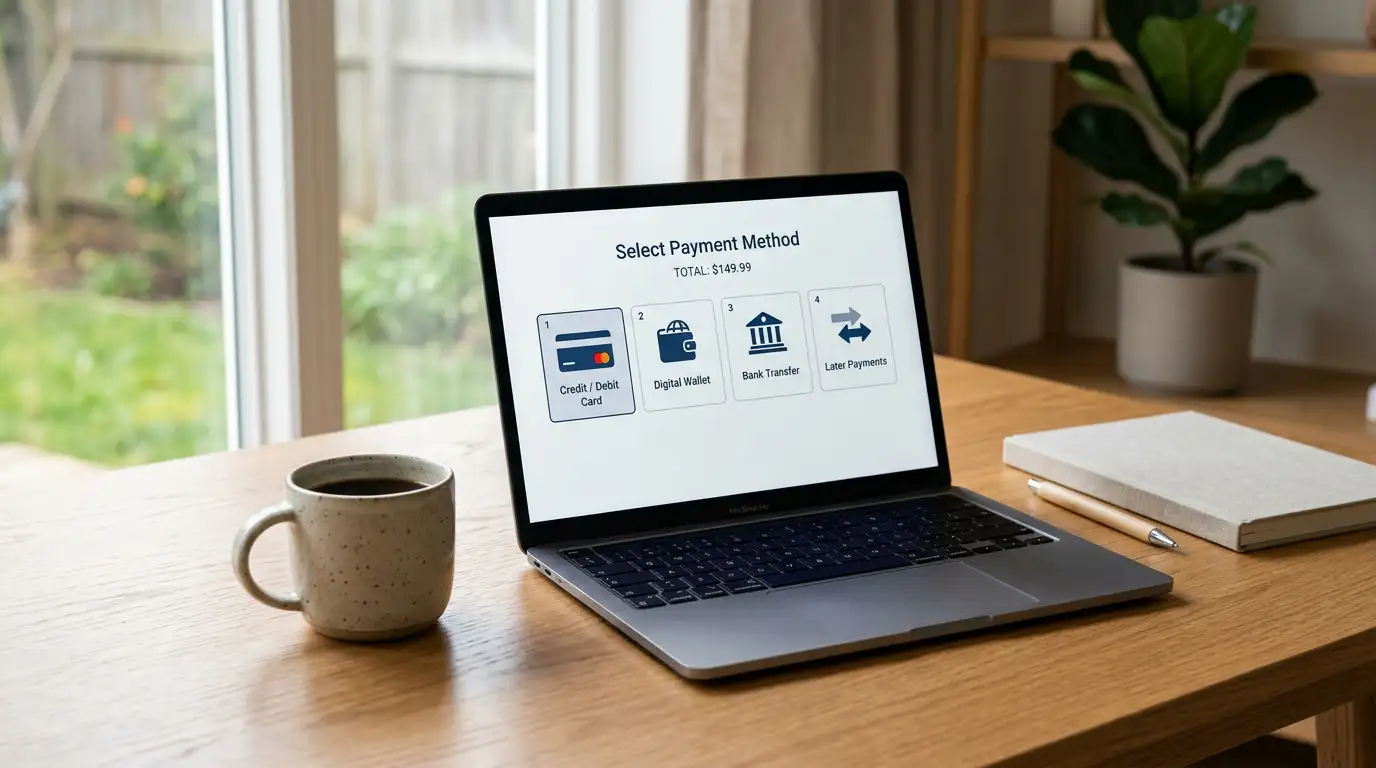
The only payment question worth asking in Australia
Getting money into an Australian-facing casino account is trivial. PayID clears in seconds. A Neosurf PIN bought at the servo credits before you’ve folded the receipt. Crypto lands inside half an hour. Every cashier on the market has solved the deposit problem, and most of them solved it years ago.
Getting money out is a different business entirely. The same cashier that took your twenty dollars in four seconds will quote three to five business days to give you two hundred back, and three of the methods sitting in that cashier cannot pay you at all — not slowly, not with a fee, not ever. They are one-way doors.
That asymmetry is the whole decision. Not fees. Not which logo you recognise. The single question that determines whether your experience is smooth or infuriating is whether the rail you picked at signup can carry money in the other direction, and most players never ask it until they’ve won something.
So pick backwards. Decide how you intend to get paid first, set that method up and get it verified, and only then work out how you’re funding the account. If those two things happen to be the same rail, excellent. If they can’t be — and with vouchers they can’t — you need both from day one, not on the afternoon your withdrawal goes pending.
Here is every method Australians will find on a cashier page, sorted by the only test that matters.
| Method | Deposit speed | Withdrawal speed | Real cost | Can it pay out |
|---|---|---|---|---|
| PayID | Seconds to minutes | Same day to 2 business days | No provider fee | Yes |
| Osko | Seconds to minutes | Same day to 2 business days | No provider fee | Yes |
| BPAY | 1–2 business days | 1–2 business days | No provider fee | Yes |
| Bank transfer | 1–2 business days | 3–7 business days | No provider fee | Yes |
| Visa debit | Instant when it clears | 2–5 business days | 1–2% casino surcharge | Yes |
| Mastercard debit | Instant when it clears | 2–5 business days | 1–2% casino surcharge | Yes |
| American Express | Not offered | Not offered | Not applicable | No |
| Credit cards | Prohibited | Prohibited | Not applicable | No |
| PayPal | Not offered here | Not offered here | Not applicable | No |
| Skrill | Instant | Under 24 hours | Around 2% | Yes |
| Neteller | Instant | Under 24 hours | Around 2% | Yes |
| Payz | Instant | 1–2 business days | Tier-based, high base FX rate | Yes |
| MiFinity | Instant | 1–3 business days | Around 1% | Yes |
| Apple Pay | Instant when the card clears | Card speed, where offered | Inherits the card’s cost | Only via the card |
| Google Pay | Instant when the card clears | Card speed, where offered | Inherits the card’s cost | Only via the card |
| Trustly | Fast where offered | Returns to the same account | No provider fee | Rarely available here |
| Neosurf | Seconds | None | Around 4% at purchase | No |
| paysafecard | Seconds | None | 0–1% | No |
| CashtoCode | On payment at the counter | None | 0–2% | No |
| Pay by phone bill | Not available | Not available | Not applicable | No |
| POLi | Discontinued | Discontinued | Not applicable | No |
| Bitcoin | 10–30 minutes | Minutes to 2 hours | Network fee | Yes |
| Ethereum | Minutes | Minutes to 2 hours | Gas, varies with congestion | Yes |
| Litecoin | Minutes | Minutes to 2 hours | Low network fee | Yes |
| Bitcoin Cash | Minutes | Minutes to 2 hours | Low network fee | Yes |
| Tether | Minutes | Minutes to 2 hours | Network fee, TRC-20 cheapest | Yes |
| Solana | Under a minute | Minutes to 2 hours | Negligible | Yes |
Five rows on that table are absences rather than options, which tells you something about how much of the payment advice aimed at Australians is recycled from other markets. We’ll get to each of them.
What is the fastest withdrawal method at an Australian online casino?
Crypto, and by a wide margin — Litecoin, Tether on TRC-20 or Solana typically clear in minutes to under two hours. The fastest fiat route is an e-wallet like Skrill or Neteller inside 24 hours, then PayID same-day. But the site’s approval queue usually costs you more time than the rail does.
PayID, Osko and BPAY — the rails Australia built
Australia has better domestic payment infrastructure than most of the countries that lecture it about fintech. The New Payments Platform went live in February 2018, connects well over a hundred banks and credit unions, and moves several billion dollars a day between accounts in near real time, around the clock. Australian Payments Plus — the body formed in 2022 by merging NPP Australia, BPAY and eftpos into one organisation — runs the lot.
For a casino player this matters more than it sounds. The NPP is the reason an Aussie-facing cashier can offer instant AUD deposits without touching a card scheme, a wallet provider or a blockchain. It is domestic, it is sanctioned, and nobody’s issuer can decline it for being gambling-adjacent, because the money has already left your account by the time anyone thinks to ask what it was for.
PayID
PayID is not a company you sign up with. It is an address — your mobile number, your email or an ABN, registered against a bank account you already hold, so that money can find you without anyone typing a BSB. Australian Payments Plus operates the registry; your bank does the work of linking it. There is no PayID app, no PayID balance, no PayID account to fund.
At the cashier that translates into the cleanest deposit experience available in this market. Seconds to minutes, no provider fee, and a typical floor somewhere in the AU$10 to AU$20 band depending on the site. Where an operator also supports outbound PayID — and most of the serious ones now do — payouts commonly land the same day, with the slower sites quoting one to two business days. Confirmation of Payee is built into the rail, so before you authorise anything your bank shows you the registered name behind the destination. Useful protection against typing your money into a stranger’s account. Also worth understanding: that visibility runs both directions, and the transfer is unambiguously a bank transfer with a name attached. Anyone using PayID for privacy has misread the product.
Osko
Osko is the same rail wearing a different label, and the confusion this generates is entirely the industry’s fault. PayID is the address on the parcel. Osko is the courier that carries it. Both are Australian Payments Plus products riding the same New Payments Platform, launched together in 2018, running 24/7 with no provider fee.
When a cashier lists “PayID” and “Osko” as two separate payment options with slightly different processing times, nothing meaningful is being offered twice. The only real distinction is how the destination gets expressed — as a registered PayID, or as a BSB and account number that Osko settles instantly instead of overnight. If a site shows both, pick whichever the deposit form makes easier and stop thinking about it.
BPAY
BPAY is the rail you already use to pay the electricity bill. The cashier hands you a biller code and a customer reference number, you log into internet banking, you enter both, the money moves. It has been part of Australian banking for decades and it joined the Australian Payments Plus stable in the 2022 unification.
Two things recommend it. The transaction appears in your banking history as a bill payment rather than as a charge from a gambling merchant, which matters to some people for reasons that are their own business. And it requires no new account, no wallet, no voucher and no card — if you can pay a bill online, you can use it. The cost is speed: one to two business days each direction, which makes it the slowest of the domestic options and useless for a Saturday-night impulse. Per-bank daily limits also apply, and cashier support is patchy rather than universal. Treat it as the backup that works when PayID isn’t on the menu.
Direct bank transfer
Underneath Osko and BPAY sits the plain BSB-and-account-number transfer, and it remains the fallback that always exists. One to two business days in, three to seven days out, no provider fee, and the highest practical ceiling of any fiat rail on the list.
Nobody chooses this for convenience. It gets chosen when the amount is large enough that e-wallet and voucher limits stop being relevant — and it is what most sites default to when a genuinely big payout needs a weekly ceiling lifted and a human being to sign it off. Worth noting that where a cashier offers both “bank transfer” and PayID, the money is going to the same account either way. You are choosing settlement speed, not destination.
Is PayID the same thing as Osko?
Effectively yes. Both are Australian Payments Plus products running on the New Payments Platform. PayID is the addressing service that lets money reach you via a phone number or email; Osko is the settlement service that actually moves it. A cashier listing them separately is describing one rail twice.

Why your card gets declined
Card declines at casino cashiers generate more confused support tickets than every other payment problem combined, and the reason is that two completely separate mechanisms are at work. Most guides mush them together into a vague line about how “some banks may block gambling transactions”. That explanation is useless, because it can’t tell you which card has a chance.
Mechanism one is statute. The Interactive Gambling Amendment (Credit and Other Measures) Act 2023 passed in December 2023 and commenced in full on 11 June 2024. It prohibits credit cards, credit-related products and digital currency as funding for regulated online wagering, and it explicitly reaches credit routed through a digital wallet — so loading a credit card into a phone wallet does not launder it into acceptability. The reform brought online wagering into line with land-based gambling, where credit-card use had been banned for years. ACMA reported industry compliance after commencement.
Mechanism two is commercial, and it is the one that actually bites most players. Australian issuers block the gambling merchant category code on their own initiative, as a business decision rather than a legal obligation. That blocking has spread from credit to debit at the major banks. It catches transactions the statute never addressed, it varies between institutions, and it changes without notice — which is why a card that funded your account last year declines today and nobody can tell you what changed.
Visa debit
The card variant with the best odds. Debit sits outside the statutory credit ban entirely, since you are spending money you already have, so the only obstacle is issuer-side merchant blocking. Independent testing consistently puts Visa debit ahead of Mastercard debit at Aussie-facing cashiers on both acceptance rate and processing reliability.
Instant when it clears. Two to five business days coming back, and a casino-side surcharge commonly in the 1–2% band. For a player who owns no wallet, no vouchers and no crypto, it is the least intimidating starting point on the cashier — provided you accept that the payout will be the slowest thing about your week. Set up something faster before you win anything.
Mastercard debit
Mechanically identical to Visa debit: same rail, same instant deposit, same two-to-five-day payout, same surcharge band. The difference is that it works less often. Decline rates at Australian issuers run higher, and because acceptance is decided by the issuer rather than the scheme, two Mastercard debit cards from two different Australian banks will behave differently at the same cashier on the same afternoon.
There is no technique that fixes this. If your Mastercard debit declines, the site didn’t reject you — your bank did, and calling the casino’s support team will produce sympathy rather than a solution. Try a Visa debit card or move to a rail that doesn’t involve a card scheme at all.
American Express
Amex is a closed loop: it issues the card and acquires the merchant itself, rather than sitting on a scheme that thousands of banks plug into. Offshore gambling merchants are largely outside the set of businesses it accepts, which means the option mostly doesn’t appear in the cashier — and where it does appear, the authorisation is unlikely to go through.
The pool of people searching for Amex casino deposits at the ten-dollar mark is substantial, and it reflects how many Australians carry the card rather than how many cashiers take it. Public detail on individual offshore Amex acceptance is thin, and the honest position is that we could not identify a working Australian implementation worth recommending. If Amex is your only card, your realistic route is PayID.
Credit cards
This one has a legal answer rather than a practical one. Credit cards, credit-related products and digital currency are prohibited as funding for regulated online wagering under the 2023 amendment, in force since 11 June 2024. No deposit, no withdrawal, no workaround through a wallet, because the wallet route is named in the provision.
Worth being precise about scope, since the distinction explains the confusion. The statute addresses regulated online wagering. Offshore casino play is not regulated wagering — it is prohibited outright under the Interactive Gambling Act regardless of which rail funds it. So a player trying a credit card at an offshore pokies site is usually stopped by their issuer’s merchant blocking rather than by the amendment itself. Two mechanisms, one outcome, and the outcome is a decline either way.
What “no Australian licence” means for your money
There is no such thing as an Australian-licensed online casino. Under the Interactive Gambling Act 2001, supplying interactive casino-style gambling — pokies, roulette, blackjack, baccarat, live dealer — to Australians is a prohibited service. Australian licences cover wagering on sport and racing, lotteries and keno. That’s it. There is no register to check, no whitelist to consult, and no domestic authority that has vetted the site holding your balance.
Every site accepting Australian casino play therefore operates from offshore, most commonly under a Curaçao authorisation. This is structural, not a red flag about any particular operator — there is no compliant alternative for them to choose. What it means for you is concrete: your recourse if something goes wrong runs through a foreign regulator, not ACMA, and the practical protection you have is the boring kind. Verify early. Withdraw often. Don’t leave a balance sitting on a site as though it were a savings account.
Why did my card get declined at an online casino cashier?
Almost always your bank, not the casino. Australian issuers block the gambling merchant category commercially, and that blocking now extends to debit cards. Separately, credit cards are prohibited by statute for regulated online wagering since 11 June 2024, including when routed through a digital wallet.
E-wallets — the fast route out without a blockchain
For players who want a payout measured in hours rather than days but have no interest in learning what a block confirmation is, e-wallets are the answer. The mechanism is simple: you fund the wallet from your bank or card once, then pay the casino from the wallet. The site never sees your account number, the transaction on your bank statement reads as a wallet top-up, and payouts return to the wallet fast because there is no card scheme or bank clearing cycle in the way.
Two catches recur across the whole category, and both cost money. Wallets charge a percentage that bank rails don’t. And several of them are excluded from welcome-offer eligibility, which means funding your first deposit through the wrong wallet can forfeit the entire bonus — a detail buried in terms nobody reads until the “free” money fails to appear and support explains, politely, that it was never coming.
Skrill
Part of the Paysafe Group and built for gambling from the start, which shows in the acceptance rate — Skrill appears on more Aussie-facing cashiers than any other wallet. Deposits are instant, payouts process inside 24 hours at most sites, and fraud protection is long-established and solid.
Around 2% per transaction makes it the most expensive wallet in this group, and Skrill deposits are frequently barred from welcome bonuses. Read the promotional terms before you fund anything. For a player who wants the fastest non-crypto exit available and has calculated that speed is worth both the fee and a forfeited first-deposit offer, it is the right choice — a narrower set of people than Skrill’s market share suggests.
Neteller
Skrill’s sibling under the same Paysafe umbrella, and near-identical on every measurable axis: instant deposits, sub-24-hour payouts, roughly 2% in fees, and the same habit of appearing on bonus exclusion lists. Independent testing finds no meaningful speed difference between them.
Which makes the choice easy in a way. Pick whichever one the cashier actually lists, or whichever already holds a balance from something else. Anyone agonising over Skrill versus Neteller is optimising a variable that doesn’t exist.
Payz, still labelled ecoPayz in places
Australians used this wallet as ecoPayz for roughly two decades. It rebranded to Payz on 11 May 2023 — same operator in PSI-Pay Ltd, an e-money institution authorised by the UK Financial Conduct Authority under FRN 900011, same accounts, same logins, same licence. Only the name and the artwork changed.
The cashiers have been slower to catch up, and this is the practical detail: some Aussie-facing sites still show the deposit option as ecoPayz three years after the change. If you’re hunting for one and seeing the other, they are the same product. On cost it sits between the Paysafe pair and the cheaper challengers, avoiding the percentage-based bank withdrawal fee that makes Skrill withdrawals sting, though a multi-tier VIP structure governs what you actually pay and the base foreign-exchange rate is on the high side. Acceptance is narrower than Skrill’s or Neteller’s.
MiFinity
The challenger, and quietly the smartest pick in this block for a first deposit. Around 1% per transaction, instant deposits, payouts clearing in one to three business days, and a usable mobile app. The casino sees a wallet account and nothing else.
The payout is slower than Skrill’s or Neteller’s, which is the obvious trade. The less obvious one runs the other way: MiFinity is more often bonus-eligible than the Paysafe pair. On a first deposit chasing a welcome offer, that eligibility can be worth several multiples of the fee difference — which makes the standard comparison of 1% against 2% a distraction from the number that matters. Acceptance at Aussie-facing sites has grown notably rather than being long-established, so check the cashier before assuming it’s there.
PayPal
The most-searched casino payment method in Australia that does not work in Australia. PayPal’s acceptable-use policy blocks gambling transactions here, so it does not appear at Aussie-facing casino cashiers — and pages promising lists of “PayPal casinos Australia” are almost always reproducing UK or European inventory, where PayPal does permit gambling at operators licensed in their own market.
The gap between demand and availability is wider here than for any other rail on the list. Note that this is a private company policy rather than Australian law, which is a distinction with a practical edge: the statute won’t change for you, but a policy could shift, and it hasn’t. Independent testers report checking hundreds of casinos without finding Australian PayPal acceptance. Treat any site claiming otherwise as a reason to close the tab.
Apple Pay
Apple Pay is not a payment rail and treating it as one causes most of the confusion around it. It is a tokenised wrapper over a card you already hold — you authorise with Face ID, Touch ID or a passcode, the card number never reaches the casino, and the transaction then travels the ordinary card rails with all the ordinary card problems attached.
Which means it inherits every block that applies to the underlying card, including the statute’s explicit reach into wallet-routed credit. If your debit card declines at a cashier, loading it into Apple Pay changes the authentication and nothing else. Advertised “Apple Pay withdrawals” are worth understanding too: what actually happens is a push to the linked debit card via Visa Direct or Mastercard Send, so the payout runs at card speed, not wallet speed. Availability depends on your issuer and card type.
Google Pay
The same wrapper logic on Android, with the same consequences and slightly narrower cashier availability at Aussie-facing sites. The underlying card governs everything: acceptance, block, payout speed, bonus eligibility.
There is nothing to choose between the two beyond which phone is in your pocket, and that is precisely the point. Neither is a rail you select. Both are interfaces to a decision you already made when you picked the card, and if that card is blocked, no amount of tapping will help.
Trustly
Trustly is an open-banking rail: it initiates a transfer straight from your bank account with no card and no wallet in the middle. In Europe it is a major payment method and genuinely excellent. Here it is thin on the ground.
The reason is unglamorous. Trustly solves in Europe the exact problem the New Payments Platform already solved in Australia, and it charges for the privilege where PayID doesn’t. The domestic rail got there first and costs less, so Aussie-facing cashiers had little reason to integrate a foreign equivalent. Where you do find it, deposits are fast and payouts return to the same bank account. Public detail on Australian casino Trustly acceptance is limited, and the search demand for it reflects the method’s European prominence rather than anything happening locally.
Does PayPal work at online casinos for Australian players?
No. PayPal’s own acceptable-use policy blocks gambling transactions in Australia, so it does not appear at Aussie-facing casino cashiers. Sites and guides listing “PayPal casinos” for Australian players are recycling UK or European inventory. Use PayID, an e-wallet like MiFinity, or crypto instead.
Vouchers and cash — money that only travels one way
Three methods on the standard Australian cashier are prepaid instruments: Neosurf, paysafecard and CashtoCode. All three are excellent at what they do. All three are structurally incapable of paying you.
Most guides note this as a property of the method and move on. Follow it through and the consequence is sharper than it looks. If you deposit by voucher, you must nominate a completely separate withdrawal rail — and at essentially every site that second rail has to be verified before your first payout clears. So the verification friction you avoided at deposit doesn’t disappear; it waits for you at the exact moment you have money to collect and are least patient about paperwork. The voucher buys convenience at the front door and charges for it at the back.
The upside is real and it isn’t speed. A voucher cannot be topped up mid-session. Whatever you loaded is the ceiling, full stop, and no amount of tilt will conjure another fifty dollars out of a spent PIN. As a spending control that is more effective than any deposit limit a site will offer you, because it is enforced by physics rather than by a settings page you can change in ten seconds.
Neosurf
The dominant cash-style rail for Australian players, run out of France and sold everywhere: newsagents, service stations, Coles, 7-Eleven, Australia Post. You buy a voucher — commonly between A$10 and A$500 — get a 10-digit PIN, type it into the cashier, and the balance appears in seconds.
No bank details, no card number, nothing identifying the transaction on your statement. The cashier charges nothing to accept it; the cost is a retail purchase margin of roughly 4%, paid when you buy the voucher, and a 2% currency-conversion charge that only applies if the voucher and the site use different currencies — a non-issue at the AUD-denominated sites Australians should be using anyway. Deposit-only, no exceptions. If Neosurf is how you fund your account, set up PayID or a crypto wallet for the way out, and do it before you play rather than after you win.
paysafecard
Functionally Neosurf with four extra digits on the PIN. You buy a prepaid voucher across a very large retail network, enter the 16-digit code at the cashier, and the deposit lands instantly at a cost of nought to one per cent. Also deposit-only.
Its international footprint is wider than Neosurf’s, but its Australian cashier presence is weaker, which inverts the ranking for local players. Between the two vouchers, Neosurf is the first choice here and paysafecard the fallback for when a particular site happens to list it and not the other. The anonymity on the deposit side is identical, and so is the gap where the withdrawal option should be.
CashtoCode
The only rail on this page that puts physical cash into an online casino balance. The cashier generates a barcode, you take it to a retail counter, you hand over notes, and the balance credits on payment. Zero to two per cent, AUD-denominated at Aussie-facing sites.
For anyone who wants no digital trace of the transaction whatsoever — no card, no bank, no wallet — this is the entire appeal, and nothing else on the cashier does it. The costs are the usual voucher costs plus two more: availability is narrower than Neosurf’s, and public detail on Australian retail coverage is thinner than for the established vouchers, so check the site’s own list of accepting outlets rather than assuming the barcode will work at the nearest counter. Deposit-only, like its siblings.
Pay by phone bill
This one is straightforward: it doesn’t exist here. Telstra, Optus and Vodafone do not support carrier billing for gambling transactions, so there is no Australian implementation of the pay-by-phone casino deposit at all.
The searches for it are imported. UK players genuinely can fund gambling accounts through mobile billing via services built for that market, and the affiliate pages describing how to do it get republished with “Australia” swapped into the headline and no other changes. If you landed on a list of Australian pay-by-phone casinos, you were reading UK inventory. For the underlying use case — depositing from your phone without a card — PayID is the local answer, and it is a better product than carrier billing ever was.
Can I withdraw winnings to Neosurf?
No. Neosurf is a prepaid voucher with no return path, and the same applies to paysafecard and CashtoCode. Deposit by voucher if you like the spending cap, but nominate and verify a second method — PayID, an e-wallet or crypto — before you play, not after you win.
POLi is switched off
Here is the part where a good deal of the payment advice aimed at Australians falls over. POLi Payments was a fixture of Australian casino cashiers for years, and its Australian service has been wound down. It no longer processes payments. Not slowly, not at some sites, not with a workaround — it is off.
You would not know this from the top of the search results. Guides currently ranking for Australian casino banking queries still list POLi as a live method, complete with processing times and recommendations about which players it suits. One page that does flag the closure gets the year wrong. Sources disagree on the precise end date, with some pointing at 2022 and several method pages naming 30 September 2023, which is why no specific day is asserted here — but the closure itself is not in dispute, and following any of those live-method recommendations means attempting a deposit that cannot complete.
POLi
POLi worked by operating inside your internet-banking session to push a transfer on your behalf. That required you to hand your banking credentials to a third party, which is precisely the pattern Australian banks spent the back half of the last decade working to eliminate. Reporting attributes the wind-down to the major banks withdrawing support over those security concerns, and to the arrival of real-time payments through the New Payments Platform removing the need for the workaround in the first place.
Which is the useful way to think about what replaced it. POLi’s whole value proposition was instant bank-to-bank deposits without a card. PayID and Osko deliver exactly that outcome through sanctioned infrastructure, with Confirmation of Payee instead of credential sharing, at no provider fee. The rail didn’t die and leave a hole; it died because something better made it redundant. If you were a POLi user, PayID is your replacement, and the migration costs you one registration at your own bank.
Can I still use POLi to deposit at an online casino in Australia?
No. POLi’s Australian service has been wound down and no longer processes payments, despite several ranking guides still listing it. Its screen-scraping model lost bank support, and the New Payments Platform made it redundant. PayID is the direct replacement — same instant bank transfer, no credential sharing.
Crypto, coin by coin
Crypto is the fastest way an Australian player gets paid, and it is the only category where the cashier offers you six genuinely different products under one heading. Most guides print a single row labelled “cryptocurrency” with a speed of “instant to one hour” and a fee of “network costs”, as though Bitcoin and Solana were interchangeable. They are not remotely interchangeable, and the differences cost real money on a real withdrawal.
Deposits across the group land in roughly ten to thirty minutes depending on the network and how many confirmations the site demands. Withdrawals commonly clear in minutes to under two hours at sites built around crypto. Costs are network fees rather than percentages, which means small payouts are proportionally expensive and large ones are almost free — the reverse of how every fiat rail behaves. And one regulatory note worth carrying: AUSTRAC reporting obligations attach to fiat conversion at the A$10,000 threshold, so crypto is fast and private in transit, not invisible at the exit.
| Coin | Settlement window | Cost behaviour | Value exposure | Where it fits |
|---|---|---|---|---|
| Bitcoin | Slowest of the six | Highest network fee | Full price volatility | Widest cashier support |
| Ethereum | Minutes | Gas, swings with congestion | Full price volatility | Second-widest support |
| Litecoin | Fast tier | Consistently low | Full price volatility | Mid-size payouts |
| Bitcoin Cash | Fast tier | Consistently low | Full price volatility | Only where listed |
| Tether | Fast tier on TRC-20 | Cheap on TRC-20, costly on ERC-20 | Dollar-pegged | Anyone avoiding volatility |
| Solana | Fastest of the six | Negligible | Full price volatility | Small, frequent payouts |
Bitcoin
The coin every cashier supports and rarely the one you should pick. Bitcoin has the broadest acceptance of the six by a wide margin, so if a site takes crypto at all it takes this — and it also has the slowest confirmations and the highest network fees in the group. On a two-hundred-dollar payout that fee is a visible bite; on a two-thousand-dollar one it is noise.
Volatility applies in full. The balance you withdraw can be worth meaningfully less by the time you convert it, which is a risk fiat rails simply don’t carry. Bitcoin is the right choice when it is the only crypto option the cashier lists, or when the amount is large enough that the fee stops mattering and you want the most liquid asset on the way out.
Ethereum
Faster than Bitcoin, settling in minutes, with the second-broadest cashier support. The problem is cost predictability: gas fees move with network congestion, so the same withdrawal can cost noticeably different amounts on two different days for reasons entirely outside your control or the casino’s.
That makes it the awkward middle of the group — quicker than Bitcoin, less predictable than Litecoin, cheaper than neither reliably. Full volatility exposure too. Reasonable if you already hold ETH and the cashier lists it. Rarely the optimum if you are choosing freely.
Litecoin
The practical pick for most Australian players moving mid-size amounts, and it gets nowhere near the attention it deserves. Quick confirmations, consistently low network cost, and wide support at crypto-capable Aussie-facing cashiers. Independent speed comparisons place it in the fast tier alongside Solana and Tether on TRC-20, comfortably ahead of Bitcoin and Ethereum.
Two properties combine well here. It is fast enough that the site’s own approval queue becomes the binding constraint rather than the blockchain, and cheap enough that the fee doesn’t eat a modest payout. If you want one crypto rail set up for casino withdrawals and you don’t want to think about it again, this is the sensible default. Price volatility still applies while you hold it, so convert without delay rather than treating a payout as an investment.
Bitcoin Cash
A 2017 fork of Bitcoin with larger blocks, which buys low fees and quick confirmations — a very similar practical profile to Litecoin’s. The catch is availability: cashier coverage at Aussie-facing sites is thinner than for Bitcoin, Ethereum or Litecoin.
So it does what Litecoin does, in fewer places. That makes it a choice of convenience rather than strategy: use it when the cashier lists it and your alternative is Bitcoin, and don’t go out of your way to acquire it otherwise. The technology isn’t the limiting factor here; the integration list is.
Tether
The one coin that removes the problem crypto usually adds. Tether holds a dollar peg, so the amount you withdraw is worth the same when you convert it as when the payout cleared. For a player who wants blockchain payout speed without an exchange-rate gamble attached to their winnings, there is exactly one answer in this group and this is it.
One condition, and it is the single most consequential choice on the crypto side of any cashier: pick the right network. Tether exists on multiple chains, and casinos commonly offer TRC-20 and ERC-20. TRC-20 is cheap and fast. ERC-20 carries Ethereum gas costs, which on a small withdrawal can exceed everything you saved by avoiding an e-wallet’s 2%. Almost nobody explains this, the cashier presents it as a dropdown with no guidance, and selecting wrong is an unforced error that costs more than the fee it was meant to avoid.
Solana
The fastest and cheapest on-chain settlement of the six — sub-second finality at negligible cost, sitting at the top of every network speed ranking. It is also the newest of the group on Aussie-facing cashiers, so support is growing rather than assured.
Solana is also the clearest illustration of why on-chain speed is the wrong thing to optimise. A Solana withdrawal at a fiat-first site with a 48-hour pending window loses badly to a Bitcoin withdrawal at a crypto-native operator that reviews payouts in twenty minutes. The chain settles in under a second; the site takes two days to authorise it.

What “instant withdrawal” actually measures
“Instant withdrawal” is the most-repeated phrase in Australian casino marketing and one of the least honest, because a payout is not one event. It is three, and the method you chose only governs the last of them.
Stage one — the approval queue
Before any rail moves, a human being or an automated risk system at the operator has to authorise the payout. At most sites this is a manual review, which is why the timing of your request matters as much as its method: a withdrawal lodged at 11pm on a Friday will sit untouched until Monday morning at any operator without weekend staffing, and no rail on earth compensates for that.
This stage is invisible in every comparison table ever published, and it routinely accounts for more elapsed time than the rail does. Sites competing seriously on payout speed compete here — automated approval below a threshold amount, a review team working weekends — and it is the first thing worth checking in a site’s own withdrawal terms rather than in an affiliate’s summary.
Stage two — the pending window
Then comes the part designed to work against you. Many operators impose a pending period of 24 to 72 hours during which your withdrawal sits reversible, and you can cancel it and push the money back into your balance with two clicks.
Be clear about what that mechanism is for. It exists because a meaningful proportion of players, given three days and a losing session, will reverse their own payout and gamble it away. It is presented as flexibility. It functions as a retention tool, and it is the largest single component of a slow payout at any site that imposes one. A site with no pending window beats a site with a 72-hour hold on every rail simultaneously — identical cashier, identical methods, completely different experience. If a site lets you lock a withdrawal so it cannot be reversed, use that setting.
Stage three — the rail
Only now does the payment method matter. Crypto clears in minutes to under two hours. E-wallets land inside 24 hours. PayID runs same day to two business days depending on the operator. Cards take two to five business days, bank transfer three to seven, BPAY one to two.
Which means the honest version of the advice runs backwards from how it is usually given. Choosing between Litecoin and Skrill adjusts stage three by a few hours. Choosing between an operator with automated approval and no pending window and one with a manual queue plus a 72-hour hold adjusts your total wait by three days. The site matters more than the method, and no comparison table in this market is organised to tell you that.
Verification, and why the first payout is the slow one
The other reason a first withdrawal disappoints is verification, and it is entirely avoidable. Under the National Consumer Protection Framework, customer pre-verification applies to online gambling accounts, and AUSTRAC’s strengthened customer identification procedures govern how operators must run it. In practice you will be asked for photo identification, proof of address and often a selfie.
The mistake almost everyone makes is waiting for the withdrawal request to trigger the document request. Upload everything the day you register, while you have no money pending and no reason to be impatient. Verified accounts pay out at the speeds quoted above; unverified accounts pay out whenever the documents finally clear review, which can add days. This single habit does more for your payout speed than any rail selection on this page.
“No verification” withdrawals
A large volume of searching goes into finding Australian casinos that pay out without identity checks, so it is worth being blunt. Customer pre-verification is a requirement for online gambling accounts, not an operator preference, and a site advertising genuinely unverified withdrawals is telling you something about its compliance posture that should worry you more than the paperwork did.
What does exist is a spectrum of when verification bites. Crypto-native operators often let you deposit, play and make small withdrawals before documents are requested, with the trigger set at a threshold amount or a cumulative total. That is deferred verification, not absent verification, and the deferral ends precisely when you win enough to care. Anonymity in this market means your bank statement stays quiet, not that the operator never learns who you are.
Do I have to verify my identity before my first withdrawal?
Yes, at any legitimate operator — customer pre-verification applies to online gambling accounts under the National Consumer Protection Framework. Upload your identification, proof of address and selfie on the day you register rather than waiting for the withdrawal request. Verifying early is the single biggest thing you control.
Deposit floors — what a dollar actually buys
Searches for one-dollar, two-dollar and five-dollar deposit casinos come in enormous volume, framed as though the floor were an operator policy you could shop between. Mostly it isn’t. The minimum is set by the rail, because a payment method that costs the site a fixed amount to process cannot accept a deposit smaller than that cost, and the sub-ten-dollar tiers largely evaporate when you check an actual cashier.
| Rail | Practical minimum | What sets the floor | Catch at the low end |
|---|---|---|---|
| PayID | AU$10–20 | Operator policy, no rail cost | Sites quoting AU$20 are common |
| Debit card | AU$10–20 | Scheme and processing cost | Surcharge hits small deposits hardest |
| BPAY | AU$10–20 | Bank and biller minimums | Slow, so small top-ups are impractical |
| Neosurf | A$10 | Smallest voucher denomination sold | Purchase margin is a fixed proportion |
| paysafecard | Around A$10 | Smallest voucher sold | Retail availability varies |
| Crypto | Set per coin by the site | Network fee economics | Network fee can exceed a tiny deposit |
| E-wallets | AU$10–20 | Wallet and casino minimums | Percentage fee makes small sums poor value |
The genuine trap at the low end is not the deposit floor at all. It is the withdrawal floor sitting above it, and the two numbers are almost never presented together. Neospin is the clean worked example: a PayID deposit minimum of AU$20 against a withdrawal minimum of AU$75. Deposit twenty dollars, run it up to sixty, and you cannot take that sixty out — you are fifteen dollars short of being allowed to leave, and the only route to the threshold is more play. Check both numbers before the first deposit, not after.
Sub-ten-dollar play is generally a false economy for a second reason. Fixed costs — a card surcharge, a voucher purchase margin, a network fee — are proportionally brutal on small amounts. A four per cent margin on a ten-dollar Neosurf voucher is forty cents before you have placed a bet.
What is the lowest deposit an Australian casino will accept?
Realistically AU$10 at most Aussie-facing sites, with many setting AU$20 for PayID specifically. Advertised one-dollar and two-dollar tiers rarely survive contact with a live cashier. Check the withdrawal minimum at the same time — a low deposit floor under a high payout floor is the real trap.

Where these rails actually work
Three sites, not ten. This is a map of payment rails rather than a ranking of operators, and the operators below are here to answer one question: where do the good rails actually appear together on a single cashier. Every one of them is offshore, because as established there is no alternative — no Australian licence for online casino play exists to hold.
| Site | Licence | Withdrawal speed | Minimum deposit | Distinguishing feature |
|---|---|---|---|---|
| Neospin | Offshore, displayed in site footer | PayID measured at 3–6 hours | AU$20 via PayID | AUD-denominated balances, 27–38 methods |
| Ricky Casino | Curaçao, operator Dama N.V. | PayID under 24 hours, measured 2–4 hours | AU$10–20 depending on rail | PayID, Neosurf and crypto on one cashier |
| King Johnnie | Curaçao eGaming, cited as 8048/JAZ | E-wallet and crypto same day | AU$10–20 depending on rail | Publicly stated licence number |
Neospin
One of the newer arrivals at neospin.au, and it reads like a site designed around payments rather than one that bolted a cashier onto a game library. The rail count runs somewhere between 27 and 38 methods depending on whose audit you read, covering PayID, cards and a broad spread of cryptocurrencies, with the licence displayed in the footer.
The detail that matters most is that balances are held in AUD. Euro-primary casinos quietly cost Australian players a conversion spread on the way in and a foreign-transaction charge on the way out, and neither appears as a line item anywhere — it is simply less money than you expected. Holding AUD removes that drag entirely. Independent testing puts PayID payouts in the three-to-six-hour band, against the site’s own broader guidance of several days, which is the usual gap between what an operator promises and what it delivers when nothing is flagged.
The catch is the withdrawal floor: AU$75, against a PayID deposit minimum of AU$20. That combination is high enough to strand a modest win, and it deserves more prominence than the pokie count of 5,000-plus titles that the marketing leads with. Suits a player depositing in reasonable sums who wants AUD, PayID and crypto in one place. Poor fit for anyone playing at the AU$20 level and expecting to cash out small.
Ricky Casino
Entered the Australian market in 2021 under Dama N.V., holding a Curaçao licence — issued under the Landsverordening op de kansspelen framework, with the Curaçao Gaming Authority now handling licensing directly rather than through the older sublicence arrangement. Five years serving Australian players is a longer run than most sites competing for these searches can claim.
On rails it hits the combination that matters here: PayID, Neosurf and crypto on one cashier. That covers the instant domestic route, the cash route for anyone who wants no bank involvement, and the fast exit — without requiring an e-wallet signup or a forfeited bonus. The library runs to three to four thousand pokies plus live dealer and table games from dozens of studios. Independent testing reports AUD withdrawals clearing inside 24 hours via PayID, with one measurement landing in the two-to-four-hour band.
The welcome package deserves the standard translation. Headlines quote around A$7,500 plus free spins; that is a staged total spread across several deposits, not a first-deposit match, and wagering conditions sit around the 50× mark. A “gift” that requires you to turn over fifty times its value before it becomes withdrawable money is a marketing expense, not a present, and the casino is not running a charity. Judge the site on the cashier, which is genuinely good, rather than on the number in the banner.
King Johnnie
Launched in 2020 by Johnnie K. N.V., and the site in this group that publishes a checkable licence number: a Curaçao eGaming authorisation publicly cited as 8048/JAZ. The game library exceeds 2,000 titles from Betsoft, Playson, Quickspin, Relax Gaming, BGaming, Wazdan, Habanero, Red Rake, Spinomenal, Booongo, Swintt, Vivo Gaming, PG Soft and thirty-plus other studios, with SSL encryption and RNG-tested games, played in AUD across a rail set spanning cards, vouchers, wallets and crypto.
That licence number rewards a closer look, and it is the kind of detail nobody bothers to explain. The xxxx/JAZ format belongs to Curaçao’s old master-and-sublicence system, where a handful of master licence holders issued sublicences onward — an arrangement the Curaçao Gaming Authority’s direct regime superseded. A displayed 8048/JAZ therefore dates the authorisation to the earlier era rather than invalidating it, and it gives you something a footer badge never does: a specific identifier to check against current records instead of a logo to take on trust. Do that check. On any offshore site, the licence you can verify is worth more than the licence you can see.
The cashier details nobody reads until it costs them
Rails your bonus will not accept
Buried in the terms of most welcome offers is a list of excluded payment methods, and Skrill and Neteller appear on it with some regularity. Fund your first deposit through an excluded rail and the bonus simply doesn’t attach — no error, no warning, just an absence you notice later.
This turns the standard wallet comparison on its head. Every guide weighs MiFinity’s roughly 1% against Skrill’s roughly 2% and declares MiFinity cheaper by a point. The number that actually decides it is that MiFinity is more often bonus-eligible than either Paysafe wallet, so on a first deposit chasing an offer, eligibility can be worth many multiples of the entire fee difference. One per cent of a hundred dollars is a dollar. A forfeited match on a hundred-dollar deposit is a hundred. Check the excluded-methods list before you pick a rail, not after.
PayID and the no-deposit question
A steady stream of searching pairs PayID with no-deposit bonuses, and the pairing is structurally confused: a no-deposit offer involves no payment, so there is nothing for a deposit rail to do at the front end.
Where PayID does enter is at the other end. Winnings from a no-deposit offer still have to leave the site, and that requires a verified withdrawal rail plus, almost always, satisfying wagering conditions first. So PayID is relevant to these offers as the payout route, and the reason the two get searched together is that players discover the withdrawal requirement after the bonus, not before.
Using the cashier as a brake
The payment page is also the most effective spending control on any casino site, and it gets ignored in favour of features that sound more serious. Three things worth using.
- A prepaid voucher enforces a hard ceiling that no amount of tilt can raise — the strongest limit available, because it is physical rather than a setting you can change in seconds.
- Deposit limits set in account preferences take effect before you are in a position to argue with them, which is the entire point of setting them while calm.
- Treat the pending window as a hazard rather than a convenience: if the site allows you to lock a withdrawal against reversal, do it the moment you request the payout.
If any of that starts feeling like a constraint you need to work around, that is the signal to stop rather than to find a rail with a higher ceiling. Free support is available in every Australian state and territory, and it costs nothing but the phone call.
Which payment methods are excluded from welcome bonus offers?
Skrill and Neteller are the usual exclusions, and some sites add other e-wallets or specific vouchers. MiFinity tends to remain eligible, which can outweigh its fee advantage several times over. Always read the excluded-methods clause in the offer terms before choosing your deposit rail.
Casino Deposit Methods Australia 2026 — Compared
Content created by the «PokiePay» team